

What is the breathability of a knit coat?
As a supplier of knit coats, I often get asked about the breathability of these garments. Breathability is a crucial factor when it comes to choosing the right outerwear, especially for those who value comfort and functionality. In this blog post, I'll delve into the concept of breathability in knit coats, exploring what it means, how it's achieved, and why it matters.
Understanding Breathability
Breathability refers to the ability of a fabric to allow air and moisture to pass through it. When you wear a coat, your body naturally produces sweat as a way to regulate temperature. If the coat doesn't allow this moisture to escape, it can lead to a build - up of heat and humidity inside the garment, making you feel uncomfortable and clammy. A breathable knit coat, on the other hand, allows sweat vapor to pass through the fabric and into the surrounding air, keeping you dry and comfortable.
Factors Affecting the Breathability of Knit Coats
Fiber Type
The type of fiber used in the knit coat plays a significant role in its breathability. Natural fibers such as cotton, wool, and linen are generally more breathable than synthetic fibers. Cotton is a popular choice for knit coats because it is soft, absorbent, and allows air to circulate easily. Wool is another excellent option. It has natural wicking properties, which means it can absorb moisture from your body and release it into the air. Linen, known for its lightweight and porous nature, also provides good breathability.
Synthetic fibers like polyester and nylon, while often more durable and water - resistant, tend to be less breathable. They can trap heat and moisture, making you feel hot and sticky. However, some modern synthetic fibers are engineered to be more breathable, and blends of natural and synthetic fibers can offer a balance of breathability and other desirable properties.
Knit Structure
The way the coat is knitted also impacts its breathability. Open - knit structures, such as a loose mesh or a lace - like pattern, allow more air to flow through the fabric compared to tight - knit structures. For example, a coat with a large gauge (fewer stitches per inch) will generally be more breathable than one with a small gauge. This is because the larger spaces between the stitches create channels for air and moisture to move.
Thickness
The thickness of the knit coat is another important factor. Thicker coats, especially those made from dense knits, are less breathable than thinner ones. A thick woolen knit coat may be warm in cold weather but can feel stuffy if worn in milder conditions. On the other hand, a thin, lightweight knit coat, like the Women Thin Knit Cardigan, is more breathable and suitable for transitional seasons.
Benefits of Breathable Knit Coats
Comfort
The most obvious benefit of a breathable knit coat is increased comfort. When your body can breathe, you'll feel less hot and sweaty, even during physical activity or in warmer environments. This is particularly important for people who are on the go throughout the day or who have an active lifestyle.

Health
Breathable fabrics can also have health benefits. By allowing moisture to escape, they reduce the risk of skin irritation, rashes, and fungal infections that can occur when sweat is trapped against the skin. Additionally, maintaining a comfortable body temperature can help your immune system function properly.
Versatility
Breathable knit coats are more versatile in terms of the weather conditions in which they can be worn. A breathable coat can be worn in a wider range of temperatures, from cool spring days to mild winter evenings. For instance, the Irregular Knit Cardigan is a great option for layering and can be worn in different seasons due to its breathable nature.
How to Test the Breathability of a Knit Coat
If you're unsure about the breathability of a knit coat, there are a few simple tests you can perform. One test is to hold the fabric up to your face and breathe through it. If you can feel the air passing through easily, it's a good sign that the fabric is breathable. Another test is to place a small amount of water on the fabric. If the water soaks in quickly and the fabric dries relatively fast, it indicates that the fabric has good breathability and moisture - wicking properties.
Our Range of Breathable Knit Coats
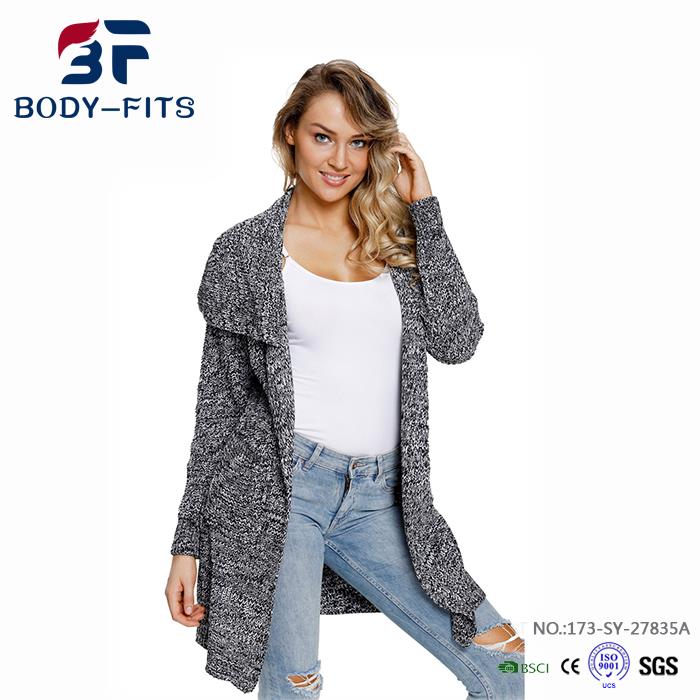
As a supplier, we understand the importance of breathability in knit coats. That's why we offer a wide range of products made from high - quality, breathable materials. Our Sweater Coat Gray is a perfect example. It is made from a blend of natural and synthetic fibers, providing both breathability and durability. The loose knit structure allows air to circulate, keeping you comfortable all day long.
We also have a variety of women's thin knit cardigans that are ideal for those who want a lightweight and breathable option. These cardigans are perfect for layering over shirts or dresses and can be worn in multiple seasons.
Conclusion
In conclusion, the breathability of a knit coat is determined by several factors, including the fiber type, knit structure, and thickness. Breathable knit coats offer numerous benefits, such as comfort, health advantages, and versatility. When choosing a knit coat, it's important to consider its breathability to ensure that you stay comfortable in different weather conditions.
If you're interested in purchasing high - quality, breathable knit coats for your store or personal use, we'd love to hear from you. Contact us to start a procurement discussion, and we'll be happy to provide you with more information about our products and pricing.
References
- "Textiles: Science and Technology" by Horrocks, A. R., & Anand, S. C.
- "The Handbook of Knitting Technology" by Postle, R., & Collins, S.