

In today's highly competitive fashion industry, product innovation is the key to a dress factory's survival and success. As a supplier for a dress factory, I have witnessed firsthand the challenges and opportunities that come with ensuring continuous innovation in our product line. This blog post will delve into the various strategies and practices that a dress factory can adopt to foster product innovation.

Market Research and Trend Analysis
One of the fundamental steps in ensuring product innovation is to stay ahead of the latest fashion trends. This involves conducting thorough market research to understand the changing preferences of consumers. By analyzing fashion shows, industry reports, and social media trends, we can identify emerging styles, colors, and patterns that are likely to be popular in the coming seasons.
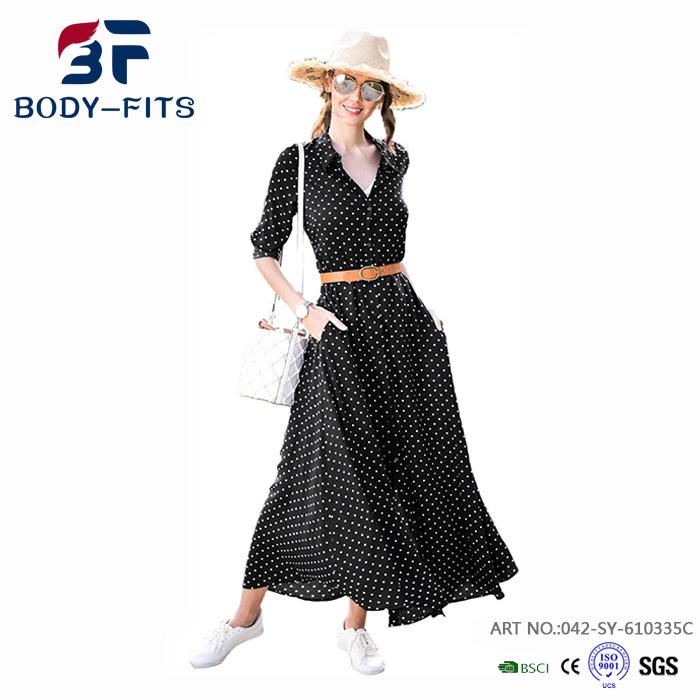
For instance, if we notice a growing trend towards sustainable fashion, we can explore using eco-friendly fabrics and production methods in our dress designs. Similarly, if there is an increasing demand for Women Shirt Dress, we can develop new variations of this classic style, such as different collar designs or fabric combinations.
Collaboration with Designers and Stylists
Collaboration with professional designers and stylists is another effective way to drive product innovation. These experts bring in fresh perspectives and creative ideas that can elevate the design of our dresses. We work closely with them to understand the target market and develop designs that meet the specific needs and preferences of our customers.
Our designers are constantly exploring new concepts and materials to create unique and eye-catching dresses. They experiment with different silhouettes, cuts, and embellishments to add a touch of novelty to our product line. For example, they might combine traditional elements with modern trends to create a fusion of styles that appeals to a wider audience.
Customer Feedback and Engagement
Listening to our customers is crucial for product innovation. We actively seek feedback from our clients through various channels, such as surveys, reviews, and social media interactions. This feedback provides valuable insights into what customers like and dislike about our existing products, as well as their suggestions for new designs.
Based on the customer feedback, we can make necessary improvements to our current dresses and develop new styles that address their needs. For example, if customers frequently complain about the fit of a particular dress, we can adjust the pattern to ensure a better fit. Additionally, if they suggest a new color or print, we can incorporate these ideas into our future designs.
Material Sourcing and Innovation
The choice of materials plays a significant role in the innovation of dress products. We are constantly on the lookout for new and innovative fabrics that offer unique properties, such as better comfort, durability, or sustainability. By sourcing high-quality materials from different suppliers, we can create dresses that stand out in the market.
For example, we might explore the use of recycled materials or organic fibers to appeal to environmentally conscious consumers. We also look for fabrics with special finishes, such as water-repellent or moisture-wicking properties, to add functionality to our dresses. In addition to traditional fabrics, we also experiment with new materials, such as smart textiles that can change color or temperature.
Technology Integration
Embracing technology is essential for a dress factory to ensure product innovation. We use advanced design software to create virtual prototypes of our dresses, which allows us to visualize the final product and make adjustments quickly. This not only saves time and costs but also enables us to bring new designs to the market faster.
In addition, we are exploring the use of 3D printing technology to create unique and intricate details on our dresses. This technology offers endless possibilities for customization and allows us to create one-of-a-kind pieces that are impossible to replicate using traditional manufacturing methods. We are also investing in digital marketing tools to better understand our customers and promote our innovative products.
Quality Control and Flexibility
While innovation is important, we also understand the significance of maintaining high-quality standards. Our dress factory has a strict quality control system in place to ensure that every dress meets our rigorous quality requirements before it leaves the production line. This includes inspecting the materials, the sewing process, and the overall finish of the dress.
At the same time, we need to be flexible and adaptable to changing market demands. We are constantly adjusting our production processes to accommodate small batch orders and custom designs. This allows us to offer a wider range of products to our customers and respond quickly to emerging trends.
Product Diversification
To further enhance product innovation, we focus on diversifying our product line. In addition to our classic dresses, we have introduced a range of new styles, such as polka dot long sleeve maxi dress and sequin one shoulder maxi dress. These new designs not only appeal to different customer preferences but also expand our market reach.
We also offer a variety of accessories to complement our dresses, such as belts, scarves, and jewelry. This allows our customers to create complete looks and provides us with additional opportunities for innovation. For example, we might design accessories that are made from the same fabric as our dresses or that feature a coordinating print.
Continuous Learning and Improvement
Innovation is an ongoing process, and we are committed to continuous learning and improvement. We encourage our employees to attend industry seminars and workshops to stay updated on the latest trends and technologies. We also organize internal training programs to enhance their skills and knowledge in design, production, and quality control.
By constantly challenging ourselves and seeking new ways to improve our products and processes, we can ensure that our dress factory remains at the forefront of the fashion industry. We are not afraid to take risks and experiment with new ideas, as we believe that this is the only way to achieve true innovation.
Conclusion
In conclusion, ensuring product innovation in a dress factory requires a combination of market research, collaboration, customer feedback, material sourcing, technology integration, quality control, and continuous learning. By adopting these strategies and practices, we can create unique and high-quality dresses that meet the ever-changing needs and preferences of our customers.
If you are interested in our innovative dress products and would like to discuss potential procurement opportunities, please feel free to reach out to us. We look forward to collaborating with you to bring the latest fashion trends to your market.
References
- Fashion Industry Journal. (Year). "Latest Trends in Dress Design."
- Textile Research Institute. (Year). "Innovative Fabrics for the Fashion Industry."
- Marketing Research Report. (Year). "Consumer Preferences in Dress Styles."